Bilateral Hearing Loss Neonatal
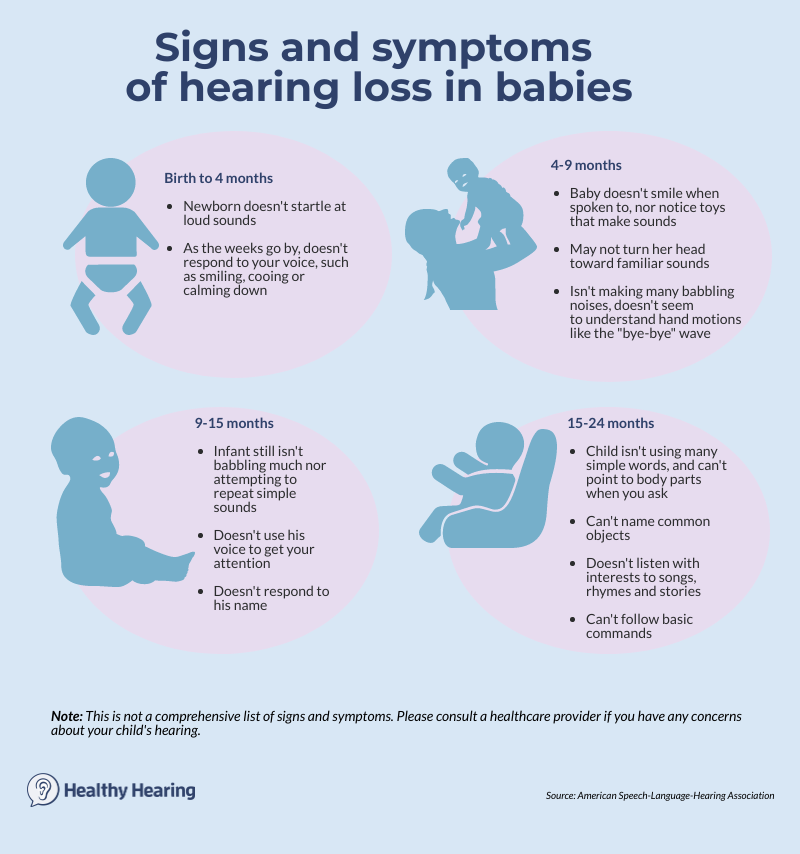
Hearing Loss In Infants And Babies

And Neonatal Characteristics In The Normal Hearing And

The Work Up Of Childhood Sensorineural Hearing Loss Pediatric
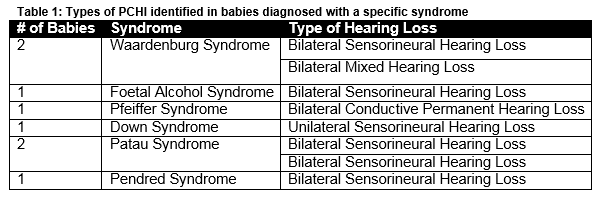
Permanent Childhood Hearing Impairment Aetiological Evaluation Of

Congenital Cmv At The Chc Neonatal Hearing Screen Results

Paediatric Hearing Loss The Bmj
Bilateral hearing loss hearing loss is traditionally defined as any defect in the ability to perceive or understand sound.
Bilateral hearing loss neonatal. The incidence of severe to profound sensorineural hearing loss snhl in children is approximately 1 2000 at birth and 6 1000 by 18 years of age. Congenital hearing loss in the fetus can occur if any of these virus infections occur during the inner ear development in the fetus. Unilateral and bilateral hearing losses may occur in children with congenital cmv infection with loss varying from unilateral high frequency losses 4 8 khz frequencies only to profound bilateral losses. You can also have a bilateral hearing loss if both of your ears ability to conduct sound into the inner ear are blocked or reduced.
A bilateral hearing loss can be caused by many factors. It is estimated that 50 of sensorineural hearing loss present at birth does not occur on a genetic basis. Most babies are born with perfect hearing. 1 although these numbers indicate that snhl is relatively common it remains underappreciated and underdiagnosed in children.
This increases to about 1 in every 100 babies who have spent more than 48 hours in intensive care. Age noise exposure heredity genes and medication which all mostly lead to a sensorineural hearing loss. Most of these babies are born into families with no history of permanent hearing loss. Virus infection just after the childbirth such as neonatal septicemia or meningitis can be damaging for the ear too.
But about 2 to 3 in every 1 000 healthy babies in the united states are born with hearing loss making it the most common birth defect. Examined family history of hearing loss admission to the neonatal intensive care unit or presence of a syndrome and progressive hearing loss. Babies who need to enter the neonatal intensive care unit have a higher risk of hearing loss. Hearing loss of 5 60 1 000 among a standardized neonatal population of at risk and not at risk infants warrants the urgent implementation of universal newborn hearing screening.
The most common causes are. Permanent hearing loss can significantly affect babies development. Conclusion this study found that almost half of children with mild bilateral hearing loss showed a decrease in hearing in at least 1 ear. Progression and fluctuation of hearing loss have been observed in children with congenital cmv infection.
2004 all infants were. One to two babies in every 1 000 are born with permanent hearing loss in one or both ears. Screening only at risk infants can miss up to 70 of all infants with hearing loss in a typical tertiary care hospital. Sensorineural hearing loss can also be present at birth because the mother suffered certain types of infections during pregnancy such as toxoplasmosis rubella cytomegalovirus or syphilis.

Incidence Of Hearing Loss According To The Presence Of Risk

Pediatric Hearing Loss American Academy Of Pediatrics

Results Of Initial Diagnostic Hearing Test And Follow Up Hearing
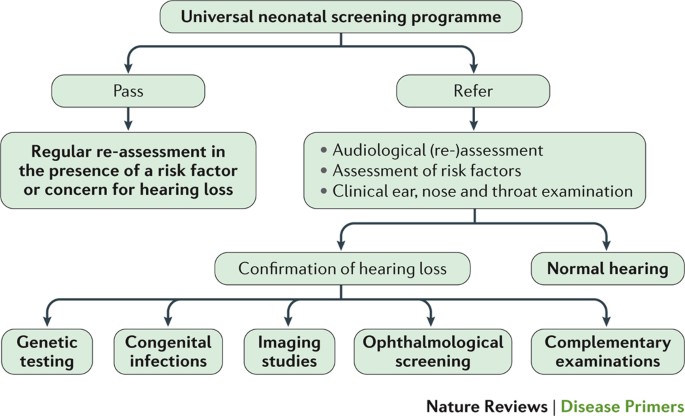
Congenital Hearing Loss Nature Reviews Disease Primers

Objectives
Hearing Impairment In Premature Newborns Analysis Based On The

Universal Screening For Hearing Loss In Newborns Us Preventive

Results Of The Initial Diagnostic Hearing Test And Follow Up

Newborn Hearing Screening Prevalence And Medical And Paramedical

Who Pilot Implementation Of Newborn Hearing Screening Programme

Risk Of Sensorineural Hearing Loss And Bilirubin Exchange

Evaluation Of Hearing Loss After Failed Neonatal Hearing Screening
Https Www Ajol Info Index Php Mjz Article View 179950 169295